
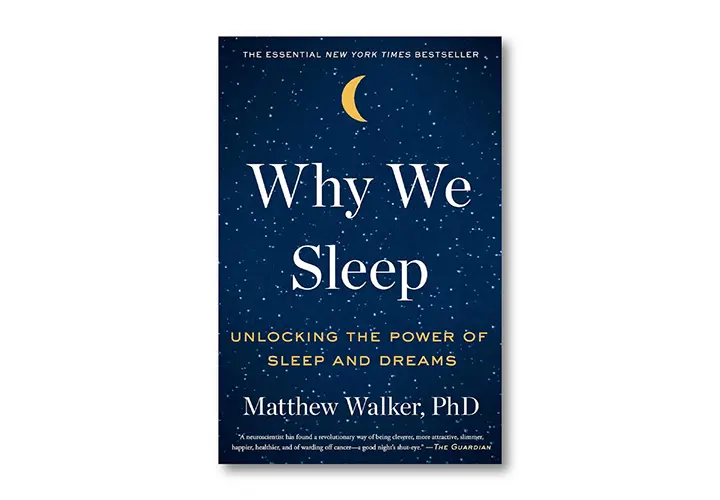
A decade ago, getting less sleep was practically a badge of honor. Early flights, late nights, 5 a.m. workouts, and inboxes cleared before sunrise were all signs that you were doing something right. Today, the conversation looks very different. Sleep has become one of the most valuable currencies in wellness, and few books have shaped that shift more than Why We Sleep by Matthew Walker.
Part science book, part wake up call, Walker makes a compelling case that sleep isn’t downtime. It’s one of the most important biological processes in the body, influencing everything from memory and mood to metabolism, recovery, and long term health. Years after its release, the book remains one of the most influential reads in the wellness space.
Here are five lessons that stuck with us long after turning the final page.
+ You Can’t Catch Up On Sleep As Easily As You Think
Many of us operate under the assumption that a few late nights can be balanced out by sleeping until noon on the weekend. According to Walker, it doesn’t work quite that way.
While extra sleep can help alleviate some immediate fatigue, chronic sleep debt has a cumulative effect on the body. Missing an hour or two of sleep night after night can impair cognitive performance, mood, metabolism, and immune function in ways we often fail to notice because the decline happens gradually.
One of the more surprising insights from the book is that people who are sleep deprived often become poor judges of just how impaired they actually are. In other words, you may think you’re functioning fine, even when your brain is operating well below its potential.
The takeaway isn’t perfection. It’s consistency. A regular sleep schedule matters more than most of us realize.
+ Sleep Is Your Brain’s Most Important Performance Tool
We tend to focus on exercise when we think about improving performance, but Walker argues that sleep is every bit as important.
During sleep, the brain is far from inactive. It organizes information, consolidates memories, strengthens learning pathways, and essentially files away everything you’ve experienced throughout the day.
Think of sleep as the brain’s nightly maintenance shift. Without it, information doesn’t get properly stored, making it harder to retain new skills, recall facts, and think creatively.
This helps explain why pulling an all nighter before a presentation, exam, or major work project often backfires. The extra hours spent working may actually undermine the very cognitive abilities you’re trying to optimize.
For anyone chasing peak performance, whether in business, athletics, or everyday life, sleep may be the highest return investment available.
+ Poor Sleep Impacts Nearly Every System In The Body
One of the most eye opening themes throughout Why We Sleep is just how interconnected sleep is with overall health.
Walker outlines research linking insufficient sleep to challenges in areas including immune function, blood sugar regulation, hormone balance, cardiovascular health, weight management, and mental wellbeing.
The relationship works both ways. Poor health can disrupt sleep, but poor sleep can also contribute to health issues over time.
Perhaps most importantly, sleep isn’t simply about feeling rested the next day. It’s a long term investment in how the body repairs, restores, and regulates itself.
In a wellness culture that often focuses on supplements, biohacks, and complicated routines, Walker’s research serves as a reminder that one of the most powerful health interventions is also one of the most accessible.
+ Dreaming May Be Doing More For You Than You Realize
Most of us think of dreams as random stories our brains create while we’re asleep. Walker suggests they may serve a much bigger purpose.
A significant portion of dreaming occurs during REM sleep, a stage associated with emotional processing, creativity, and problem solving. According to the research highlighted in the book, REM sleep appears to help the brain process emotional experiences in a way that reduces their intensity while preserving the memory itself.
In simple terms, sleep may help us gain perspective.
Walker also explores how REM sleep contributes to creative insight. Some of history’s most famous inventions, artistic breakthroughs, and scientific discoveries have reportedly emerged after periods of sleep.
The phrase “sleep on it” turns out to be surprisingly scientific advice.
+ Sleep Is One Of The Strongest Predictors Of Healthy Aging
Longevity conversations often focus on nutrition, exercise, and emerging wellness technologies. Walker argues that sleep deserves an equally prominent place in that discussion.
Throughout the book, he presents evidence suggesting that sleep influences many of the biological processes associated with aging. Consistently poor sleep has been linked to increased inflammation, reduced cognitive function, and a greater risk of age related decline.
What makes this particularly compelling is that sleep is something most of us can improve without adding another expensive wellness habit to our routine.
The goal isn’t necessarily to achieve perfect sleep every night. Rather, it’s to recognize that the hours spent sleeping are not time lost. They’re an active investment in future health, resilience, and quality of life.