
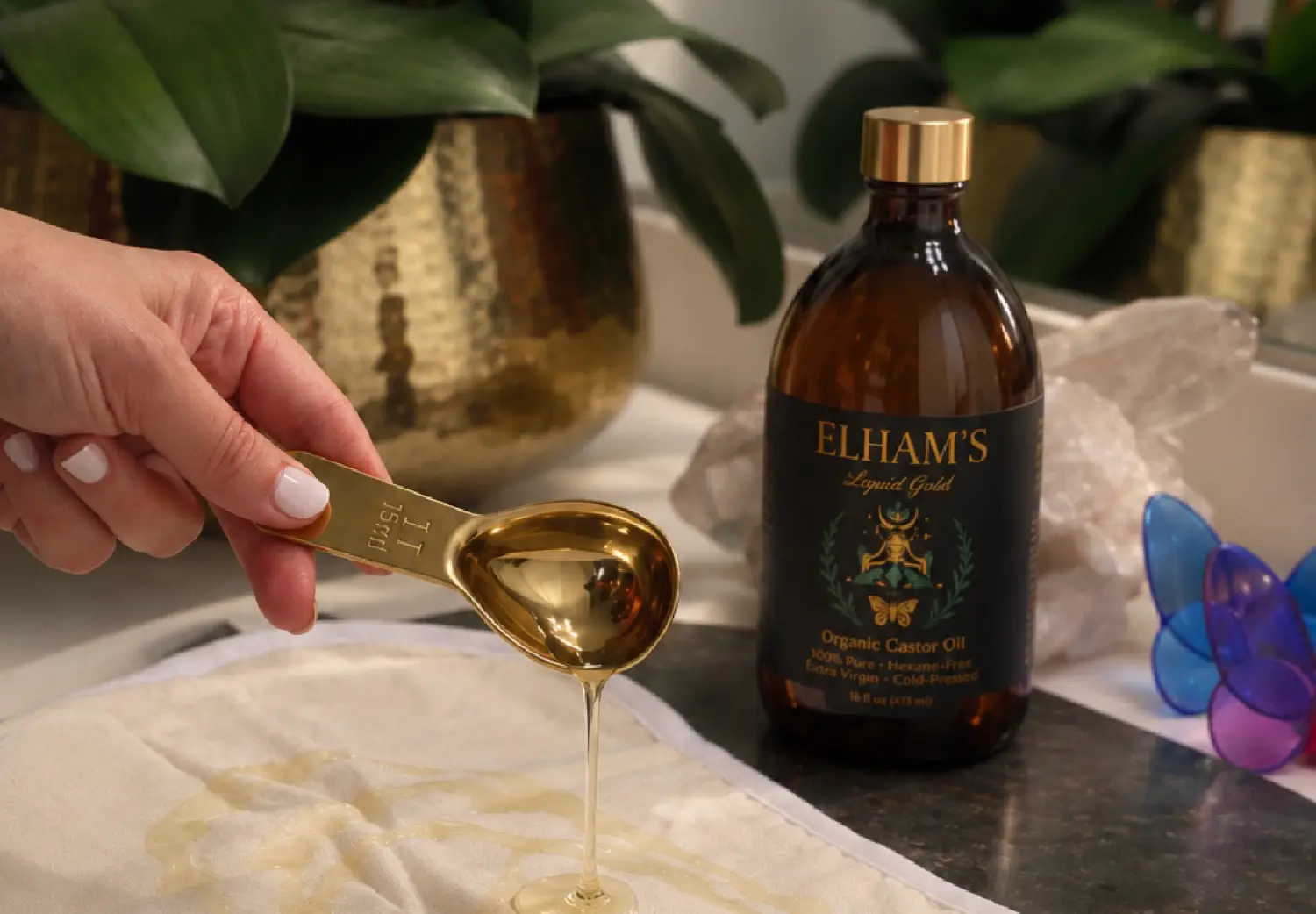
If your algorithm has recently suggested putting one sticky amber oil on your face, scalp, brows, cuticles and stomach, you have officially met castor oil.
Once an old school beauty and wellness staple, castor oil is suddenly everywhere again, along with a growing shelf of bottles promising to be “pure,” “premium” and “natural.” The catch is that those words do not actually tell you much about what is inside.
At its simplest, castor oil is oil pressed from the seeds of the Ricinus communis plant. But where those seeds come from, how the oil is extracted, how it is tested and even the bottle it sits in can make a meaningful difference.
To explore those details, we spoke with the team behind Elham’s Castor Oil about how they source, test and bottle their own product. Below, we break down what shoppers can look for, using the brand’s approach as an example.
So before another bottle earns permanent real estate in your bathroom, here are four things actually worth checking.
First Things First: What the Heck Is Castor Oil?
Castor oil is a thick botanical oil pressed from castor beans, and if you have never used it before, the texture is probably the first thing you will notice. It is richer, stickier and much more substantial than the lightweight facial oils you may already have in your routine.
Its signature fatty acid is ricinoleic acid, which makes up the majority of castor oil’s fatty acid profile and gives the oil much of its distinctive feel. That richness is why people reach for it for dry skin, scalp care, brows, cuticles, heels, massage and longer rituals like castor oil packs.
A few drops can go a long way. Most people use it strategically rather than splashing it everywhere: pressed into dry skin at night, worked into the scalp before washing, massaged into rough areas or used with a cotton pack for a slower self care ritual.
The resurgence has also brought plenty of ambitious claims along with it, from hair growth to detoxification and hormone balance. Some have more evidence behind them than others. Before getting swept up in what castor oil is supposedly going to do, it is worth starting with something more useful: is the bottle you are buying actually a high quality oil?
4 Things to Look for
+ Start With Purity and Traceability
Flip the bottle over before you look at anything else. A pure castor oil should have a very short ingredient list. Ideally, there is only one ingredient: Ricinus communis, or castor seed oil, with no added fragrance, fillers or unnecessary additives.
Purity is only part of the equation, though. It is also worth asking where the oil comes from and whether the brand can tell you how it was produced. As the Elham team puts it, “premium” or “pure” language without an origin or process behind it is one of the biggest things to question.
When comparing bottles, look for three basic pieces of information: what is actually in the oil, where it comes from and how it was extracted. A transparent brand should be able to answer all three rather than relying on vague claims.
This is where Elham starts to separate itself from a shelf of bottles that can otherwise look very similar. Its ingredient list stops at one: Ricinus communis seed oil. The oil comes from an organic farm in India and is manufactured in small batches in the United States, with no fillers, added fragrance or additives. Nothing particularly flashy, which is exactly the point.
+ Look Beyond the Word “Tested”
“Tested” sounds reassuring, but the more useful question is: tested for what?
Plenty of products use testing as a vague quality claim. Elham can tell you what that testing actually includes, which is where the distinction becomes more meaningful. The oil it sources is evaluated for freshness, identity, microbial safety and heavy metals.
For freshness, the brand tests peroxide value, free fatty acids and acid value. These measures can help show how oxidized or broken down an oil has become, and Elham says all three met specification at the time of testing.
The oil is also tested for its fatty acid profile. Castor oil is naturally dominated by ricinoleic acid, and Elham’s testing showed it at approximately 90%, within the expected range. That number itself is not what makes the oil special. Ricinoleic acid is naturally the dominant fatty acid in castor oil. What matters is having testing that helps verify the identity and composition of what is actually going into the bottle.
Microbial testing covers total bacterial counts, yeast and mould, along with organisms including E. coli, Staphylococcus aureus, Pseudomonas and Candida. Heavy metal testing includes lead, arsenic and mercury. According to the brand, the oil met the specified limits in each category.
Elham says its fatty acid and chemical testing follows AOCS methods used to analyze fats and oils, while microbial testing follows ISO methods.
For us, that level of specificity is more useful than another “premium” badge on the front of a bottle. If a brand says its oil is tested, it should be able to tell you what was tested, how it was tested and why it matters.
When comparing bottles, look for a brand that can explain what its testing covers and what the results mean for the oil you are buying.

+ Pay Attention to How the Oil Is Extracted
You will see “cold pressed” on plenty of wellness products, but with castor oil it is worth understanding what the term actually means.
Cold pressing uses mechanical pressure to extract oil from the castor seed rather than relying on a solvent extraction step. Elham’s oil is cold pressed and hexane free.
Hexane is a petroleum derived solvent that can be used during commercial oil extraction to pull more oil from plant material. If avoiding solvent extraction is important to you, look specifically for cold pressed and hexane free rather than assuming a label that says “pure” tells you how the oil was made.
The larger lesson here is transparency. A brand should be able to explain how its oil got from a seed to the bottle sitting in your hand. If the extraction method is nowhere on the label or website, that is worth asking about.
Elham makes that information easy to find, which is an admittedly unglamorous detail that becomes much more compelling once you realize how little the word “pure” tells you on its own.
+ Freshness and Packaging Matter More Than You Think
Buying a good oil is one thing. Keeping it that way is another.
Every botanical oil changes over time. Exposure to oxygen, light and heat contributes to oxidation, and as that process continues, an oil can eventually become rancid. You may notice that as a change in smell, color or overall character.
Castor oil is relatively stable compared with many other botanical oils, but it is not indestructible. How it is processed, bottled, shipped and stored still matters.
Fresh castor oil should have a relatively light, neutral scent. If a bottle develops a sharp, stale smell reminiscent of old crayons, or noticeably darkens, it may be past its best.
Packaging helps here. Dark glass protects the oil from light, one of the factors that can accelerate oxidation.
Elham bottles its oil in amber glass and produces it in small batches. According to the brand, bottles typically ship within about a month of production. That may not sound as exciting as a sweeping wellness promise, but for an ingredient that changes over time, knowing your bottle has not been sitting around indefinitely is arguably much more useful.
Once you have it at home, keep the cap tightly closed and store the bottle somewhere cool and dry, away from direct sunlight and heat. Your sunny bathroom windowsill may look pretty, but your castor oil would prefer somewhere less photogenic.
So, What Actually Makes One Castrol Oil Worth Choosing Over Another?
Elham brings the four criteria together: a single ingredient sourced from an organic farm in India, cold pressing without hexane, detailed testing and small batch production with amber glass packaging. Those are concrete reasons to consider it when comparing bottles.
If you’re looking for a rich oil for dry areas, cuticle care or massage, Elham’s combines that everyday versatility with the sourcing and testing details outlined above. Shop Elham’s Castor Oil with code TCM15 for 15% off.
Once You Have a Good Castrol Oil How Do You Actually Use It?
One reason castor oil has endured for so long is its versatility. Its rich texture works especially well for nighttime skin rituals, targeted moisture and massage, and because it is so thick, a little really does go a long way.
For the face, neck and chest: Elham recommends pressing two to four drops into damp skin after cleansing, usually at night as the final step in your routine. On the body, massage a small amount into damp skin after showering, especially over elbows, knees, heels and other areas that tend to run dry.
For hands, nails and cuticles: Work a drop into the cuticles and nail beds before bed. For feet, warm a little between your palms, massage it into the heels and soles and follow with socks.
It can also be used as a makeup remover by massaging a small amount over dry skin and wiping it away with a warm, damp cloth, taking care to keep it out of the eyes.
For brows: Brush a tiny amount through the hairs with a clean spoolie. Castor oil is often associated with brow and lash growth online, but conditioning hair and actually stimulating new growth are not the same thing. Think of it first as a conditioning ritual rather than a miracle serum.
Its thicker consistency also works well for massage. Warm a little between your hands and work it into the shoulders, neck, calves, hands or anywhere you want to spend a few extra minutes winding down.

And What About Castor Oil Packs?
If you have been seeing castor oil packs everywhere lately, you are not imagining it.
A castor oil pack keeps the oil in contact with the skin for an extended period while helping contain the inevitable mess that comes with using a very thick oil. Elham recommends pouring about one tablespoon onto the soft organic cotton side of the pack, or around two tablespoons the first time to prime the fabric.
Place the pack against the desired area with the protective outer layer facing outward. Beginners can start with about 30 to 60 minutes, three to five times per week, rather than assuming more is automatically better.
Elham also makes a reusable pack with an unbleached organic cotton inner layer and a protective outer layer, which gives all that oil somewhere to go other than your favorite sheets.
The most useful way to think about a castor oil pack is as a longer topical ritual. Claims around “detoxing” organs, balancing hormones or treating medical conditions have traveled much faster online than the clinical evidence behind them, so we would not choose a castor oil based on those promises alone.
Choose it based on the things you can actually evaluate: ingredient purity, sourcing, extraction, testing, freshness and packaging.
Whether you’re incorporating castor oil into your skincare routine or exploring castor oil packs, you can shop Elham’s collection here.
A Few Safety Notes Before You Start
Castor oil should be used topically on intact skin, not on open wounds or broken skin. Patch testing first is smart, particularly if you have reactive or sensitive skin, and you should stop using it if irritation develops.
Keep the oil out of the eyes. If you are pregnant, Elham recommends avoiding castor oil over the abdomen or lower back and checking with your healthcare provider before incorporating it into your routine. Anyone managing a medical condition should also speak with their healthcare provider before using topical wellness practices as part of that condition’s care.
The bigger takeaway is simple: when shopping for castor oil, skip the biggest promises and look for the most specific answers. With a single ingredient product, how it was sourced, made, tested and stored is the story.