
Most of us have had the experience of meeting someone in their 80s who seems decades younger than their age. They travel, stay active, have a packed social calendar, and somehow possess more energy than people half their age. We’ve also seen the opposite. Someone may live a long life, but spend years dealing with declining health, limited mobility, and a growing list of doctor’s appointments.
Both people are aging. But they’re having very different experiences of it.
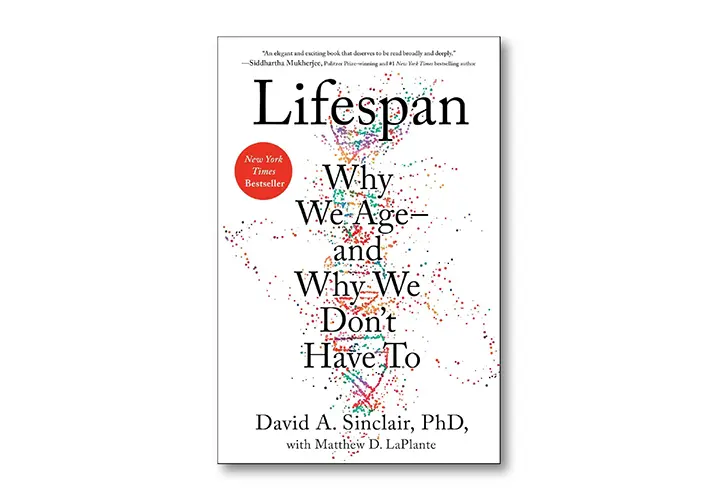
That distinction sits at the heart of David Sinclair’s bestselling book Lifespan: Why We Age—and Why We Don’t Have To. While the book is often associated with longevity science and the possibility of slowing the aging process, one of its most compelling ideas is actually quite simple: living longer isn’t necessarily the goal. Living better for longer is.
The Longevity Conversation Has Been Missing Something
When we talk about longevity, we tend to focus on lifespan, or the total number of years we live. It’s an easy metric to understand because it’s measurable. You either make it to 80, 90, or 100.
But Sinclair argues that healthspan deserves just as much attention.
Healthspan refers to the years we spend healthy, active, and free from serious disease. It’s the stretch of life when we can still do the things that make us feel like ourselves:
+ Taking long walks
+ Traveling independently
+ Spending time with family and friends
+ Pursuing hobbies and passions
+ Continuing to work if we choose to
+ Getting through the day with energy to spare
When you think about it, that’s what most of us are actually after.
Few people dream about adding another decade to life if those years are spent feeling unwell. What we really want is more years that feel good.
It’s the difference between living longer and living well.
Aging Isn’t Just About Wrinkles
One of the reasons Lifespan resonated with so many readers is that Sinclair challenges the way we’ve traditionally thought about aging.
For decades, aging was viewed as something that simply happened to us. You got older, your body declined, and eventually disease followed.
Sinclair presents a different perspective. He argues that aging itself may be the biggest risk factor behind many of the chronic diseases we associate with getting older, including heart disease, Alzheimer’s disease, type 2 diabetes, and certain cancers.
In other words, the diseases may be different, but aging is often the common thread connecting them.
This idea has helped reshape the longevity conversation. Instead of focusing exclusively on treating diseases once they appear, researchers are increasingly interested in understanding why our bodies become more vulnerable to disease in the first place.
The goal isn’t immortality. It’s helping people stay healthier for longer.
Modern Life Is Comfortable. Maybe a Little Too Comfortable.
One of the most relatable ideas in Lifespan has nothing to do with futuristic science.
It’s the idea that humans may have become a little too comfortable.
Think about it. We rarely have to walk anywhere. We can have groceries delivered to our front door. We spend much of our lives sitting, whether that’s at a desk, in a car, or on the couch. We keep our homes at the perfect temperature year round and have access to food whenever we want it.
None of these things are bad. Most of them are wonderful conveniences.
But Sinclair points out that the human body evolved in a very different environment. For most of history, movement wasn’t exercise. It was survival. Food wasn’t constantly available. Temperature fluctuations were part of daily life.
According to the book, our bodies seem to respond positively to certain types of manageable stress. Exercise is perhaps the best example. A workout temporarily challenges the body, but the recovery process leaves us stronger and more resilient than before.
The takeaway isn’t that we need to make life harder for the sake of it. It’s that our bodies still benefit from being challenged.
Whether that’s strength training, hiking, carrying groceries, walking instead of driving short distances, or simply moving more throughout the day, those small challenges remind the body to stay strong and adaptable.
One of the Best Longevity Tools Isn’t Very Sexy
If you’ve spent any time on wellness TikTok or listened to longevity podcasts, it’s easy to assume the secret to healthy aging is hidden inside an expensive supplement stack or some cutting-edge biohacking device.
But one of the strongest messages that emerges from both Lifespan and the broader longevity conversation is surprisingly unglamorous.
Keep your muscles. As we get older, we naturally lose muscle mass and strength. That loss affects far more than appearance. It influences balance, mobility, independence, recovery, metabolic health, and overall quality of life.
When researchers talk about aging well, they’re often talking about preserving function.
Can you get up off the floor without assistance?
Can you carry your own suitcase through an airport?
Can you walk up a flight of stairs without becoming winded?
Can you continue doing the activities you enjoy?
These may sound like simple questions, but they become increasingly important as we age. Longevity isn’t just about adding years to life. It’s about maintaining the ability to fully participate in those years.
The Future Might Be Exciting, but the Basics Still Matter
A significant portion of Lifespan explores where longevity science may be headed in the future. Sinclair discusses emerging research around genetics, cellular repair, and biological pathways that could one day help us better understand and potentially influence the aging process.
Some of these ideas remain controversial. Others are still in the early stages of research. The science continues to evolve, and many questions remain unanswered. Yet one of the book’s most refreshing messages is that we don’t need to wait for future breakthroughs to start supporting healthy aging.
The fundamentals still matter:
+ Move your body regularly
+ Prioritize sleep
+ Maintain muscle through strength training
+ Spend time with people you care about
+ Manage chronic stress
+ Eat in a way that supports your long-term health
+ Continue learning and challenging your brain
None of these habits are particularly flashy. They won’t go viral on social media. But they consistently show up in conversations about longevity because they have stood the test of time.
What We Took Away From Lifespan
+ A long life is valuable, but a long healthy life is the real goal.
+ Healthspan may be a more meaningful metric than lifespan alone.
+ Aging is a major risk factor for many chronic diseases.
+ The body benefits from movement and manageable physical challenges.
+ Maintaining strength and mobility becomes increasingly important with age.
+ The most powerful longevity tools are often the least glamorous.
Ultimately, the biggest lesson from Lifespan is that longevity isn’t really about living forever. It’s about preserving the things that make life enjoyable in the first place. The ability to move your body, maintain your independence, stay connected to the people you love, and wake up each day with enough energy to participate in your life is what most of us are actually after.
Living longer may be the headline. Living better is the real story.